
Quick answer: Good memory games for seniors are easy, enjoyable and done regularly: large print word searches, simple Sudoku, card matching, a “what is missing” tray game, jigsaw puzzles, naming faces in family photos and word category games. They keep the mind active and can be a pleasant daily habit, but no game can promise to prevent memory loss.
Key takeaways
- Choose games that are fun, not stressful. No timers and no scores.
- Large print, good light and short sessions make every game easier.
- Games are a healthy habit, not a medical treatment.
Many families look for memory games for their parents or grandparents. They want something that is enjoyable, gentle on the eyes and not too complicated. The eight ideas below need little or no equipment, and most can be played alone or with a grandchild.
1. Large print word search
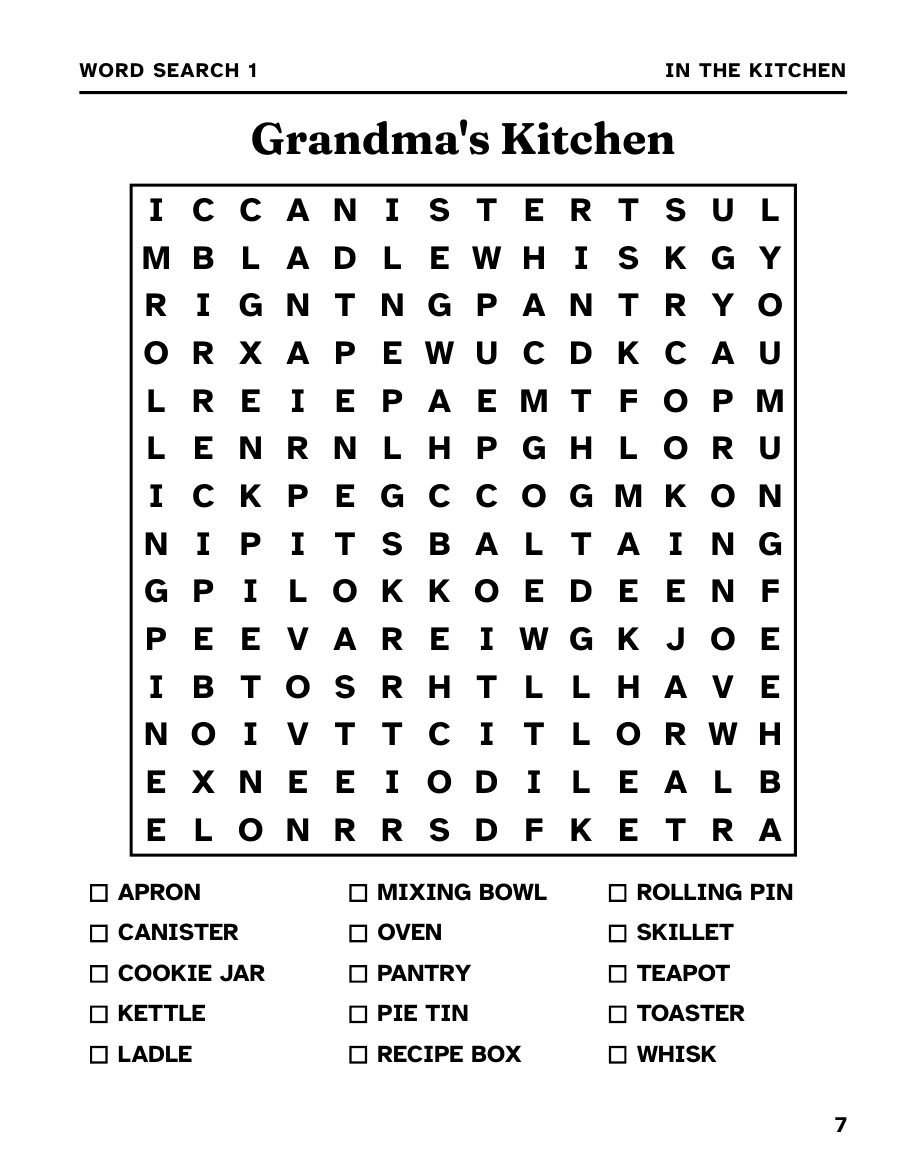
A word search asks you to scan a grid for hidden words, which exercises attention and word recall. For older readers the key is big, clear letters and plenty of white space, with no words hidden backwards. Themes from the past, like a grandmother’s kitchen, make it feel like a visit down memory lane. Our guide to large print word search and Sudoku for seniors explains what to look for.
2. Easy Sudoku
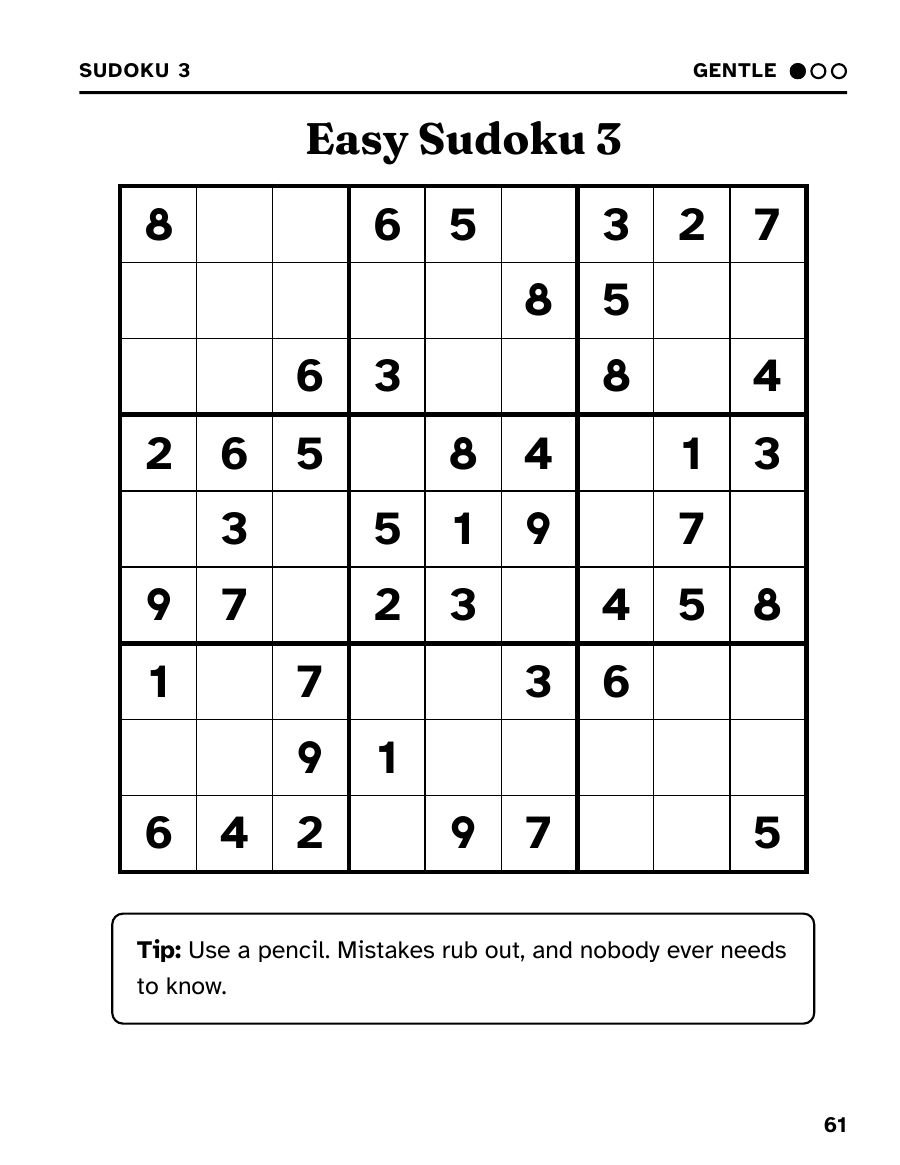
Sudoku uses numbers 1 to 9, but it is a logic game, not a maths test. Start with “gentle” puzzles that have lots of numbers filled in, and use a pencil so mistakes rub out. Many people find the quiet focus of a Sudoku relaxing.
3. Card matching (pairs)
Lay out 12 to 16 playing cards face down in rows, in matching pairs. Take turns turning over two cards and trying to find a pair. It trains short-term memory and works wonderfully with grandchildren. Start with fewer cards and add more as it gets easier.
4. The “what is missing?” tray
Put six to eight everyday objects on a tray, such as a spoon, a key, a pen and a cup. Let your partner study them for 30 seconds, then cover the tray and secretly remove one item. Ask: what is missing? It needs no equipment and gets a smile every time.
5. Jigsaw puzzles
A jigsaw puzzle combines visual search, patience and a sense of achievement. For seniors, choose large pieces and 100 to 300 pieces with a clear picture, and set it on a table that can stay out for a few days so people can add a piece whenever they walk by.
6. Name the faces in family photos
Sit down with a photo album and take turns naming people, places and years. This kind of reminiscence is often a joy, and it creates stories that your family may want to write down. If a name is forgotten, just move on kindly, the point is the conversation.
7. Word category games
Pick a category, such as fruits, countries or birds, and take turns naming one item each without repeating. Or go through the alphabet: “an animal beginning with A, then B…”. These games can be played in the car, at the table or on a walk.
8. Music from the old days
Play the first few seconds of songs from their teens and twenties and guess the title or the singer. Music often brings back strong memories, and it turns a quiet afternoon into a singalong. You can ask ChatGPT to prepare a list for you:
Check the answers, as AI can make mistakes, before you play.
What does the research say?
A large 2019 study by the University of Exeter and King’s College London looked at over 19,000 adults aged 50 and older. People who did word and number puzzles more often tended to do better on tests of attention, reasoning and memory. That is encouraging, but the study cannot prove that puzzles are the cause, and no puzzle can prevent or treat a memory condition. Think of games as one pleasant part of a healthy routine alongside walking, sleep, good food and time with friends.
How to make games more enjoyable
- Use large print. Squinting spoils the fun.
- Good light. A lamp beside the chair helps a lot.
- No pressure. Skip timers and scores, and praise effort, not speed.
- Keep it short. Ten to twenty minutes is plenty.
- Make it social. Playing with a grandchild or friend is half the benefit.
A ready-made option
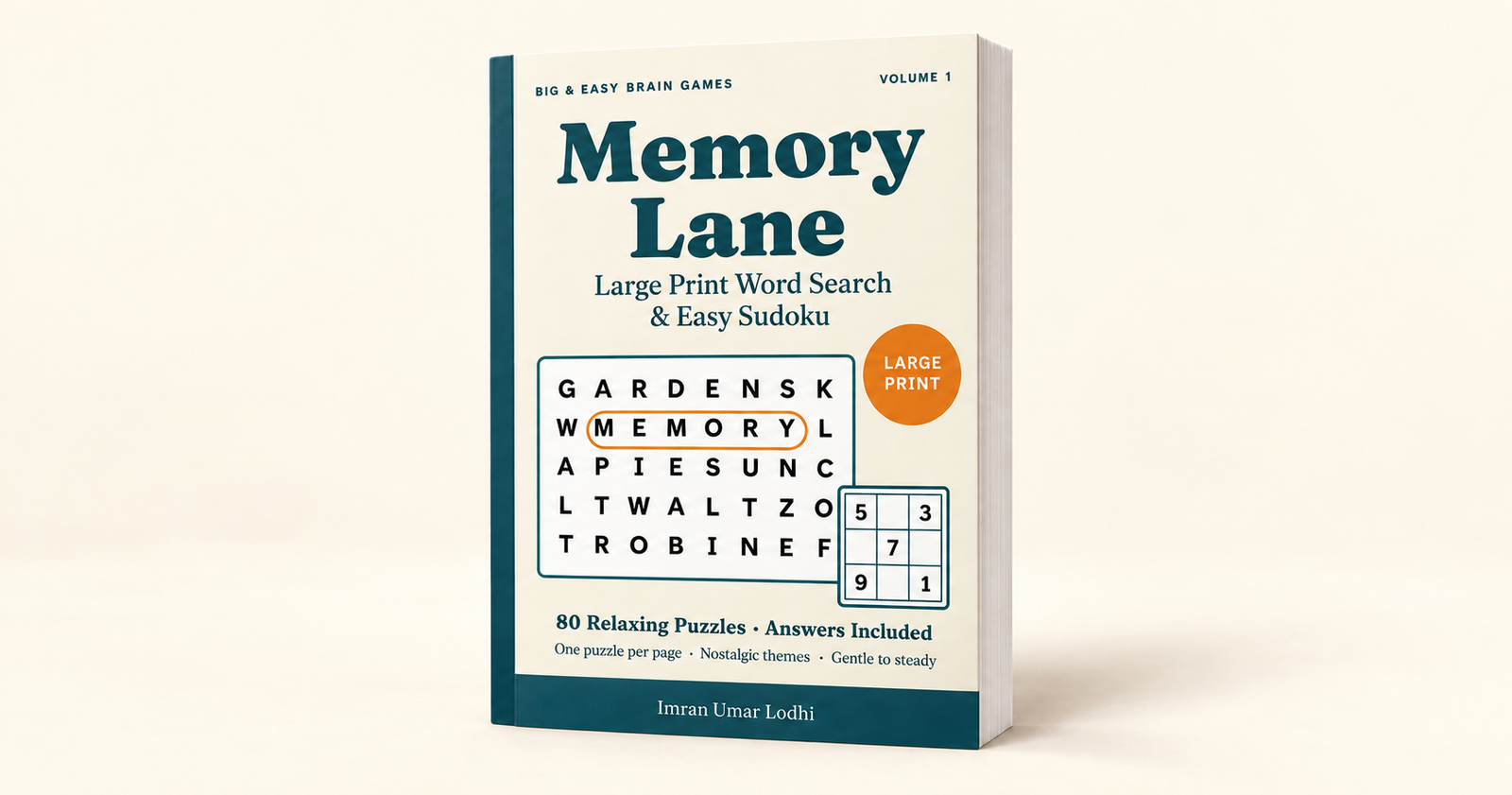
If you want something you can print and use right away, Memory Lane is a large print puzzle book with 50 word searches and 30 easy Sudoku, one puzzle per page and answers at the back. The word search letters are set at 23 point in a typeface designed for low vision readers, and the themes bring back memories of Sunday dinners, the county fair and school days.
What this guide cannot do
This article is general information and not medical advice. If you or someone you love is noticing changes in memory, repeated confusion or difficulty with everyday tasks, please see a doctor.
Frequently asked questions
What are the best memory games for seniors?
Easy options include large print word searches, simple Sudoku, card matching, a ‘what is missing’ tray game, jigsaw puzzles, naming people in family photos, and word category games. The best game is the one a person enjoys enough to play regularly.
Do memory games prevent dementia?
No game can promise that. A large 2019 study from the University of Exeter and King’s College London found that adults over 50 who did word and number puzzles more often tended to score better on tests of memory and reasoning, but that kind of study cannot prove puzzles cause the difference. Exercise, sleep, healthy eating and social contact matter too.
How often should seniors play brain games?
Short and regular works best. Ten to twenty minutes a day is a comfortable habit for many people. There is no need for timers or scores, and stopping when it stops being fun is fine.
Are word search puzzles good for older adults?
They are a gentle way to practice scanning, attention and word recall. Large print and good lighting make them much more enjoyable for people with weaker eyesight.
I am worried about my parent’s memory. Should I buy puzzles?
Puzzles are a pleasant activity but they are not a test or a treatment. If you notice changes in memory, repeated confusion or trouble with everyday tasks, book an appointment with a doctor.
Looking for a relaxing gift for Mom, Dad or grandparents? Memory Lane has 80 large print puzzles, 50 word searches and 30 easy Sudoku, with answers included. Instant PDF download that you can print as many times as you like.
Get Memory Lane — $12.99Related reading: ChatGPT for seniors: a beginner’s guide and how to teach your parents ChatGPT in 15 minutes.
Last updated: October 2026. This article is for general information only.